Save 10% On Your Project Today
The Unique Challenge of Septic Systems in the NC Foothills
If you own property in Columbus, Polk County, or the surrounding Foothills region, you already know that this landscape is unlike anywhere else. The steep slopes, dense red clay, and rocky substrata that make this area beautiful also create unique challenges for septic systems. Between late winter storms that saturate the ground and summer downpours that test every drainage plan, systems installed without accounting for local soil conditions often fail within their first decade.
Generic septic designs assume sandy, well-draining soil and level terrain. They do not anticipate the compacted clay that holds water like a basin, the seasonal water table that rises three feet after a heavy rain cycle, or the sloped lots that send runoff directly over drainfields. Property owners across the Foothills have learned this lesson the hard way when backups occur, odors develop, or wet spots appear exactly where the leach field was installed. Understanding why these failures happen and how to prevent them starts with recognizing the environmental realities of this region.
How NC Red Clay & High Water Tables Impact Your Septic System
The red clay soil that dominates Polk County and surrounding areas presents a fundamental problem for septic drainfields: percolation. Healthy septic systems rely on soil that absorbs and filters wastewater at a steady rate. Sandy soils allow water to pass through quickly, while clay retains moisture and drains at a fraction of that speed. When effluent cannot move through the soil efficiently, it backs up into the distribution lines, saturates the drainfield, and eventually surfaces in your yard or reverses into your plumbing.
This problem intensifies during periods of seasonal saturation. The Foothills typically see heavy rainfall from late fall through early spring, and again during summer thunderstorm season. When the water table rises after consecutive days of rain, it can reach within inches of your drainfield, leaving no room for the system to disperse wastewater. If the original site prep did not account for proper grading and surface water diversion, rainwater runoff compounds the issue by pooling directly over the absorption area.
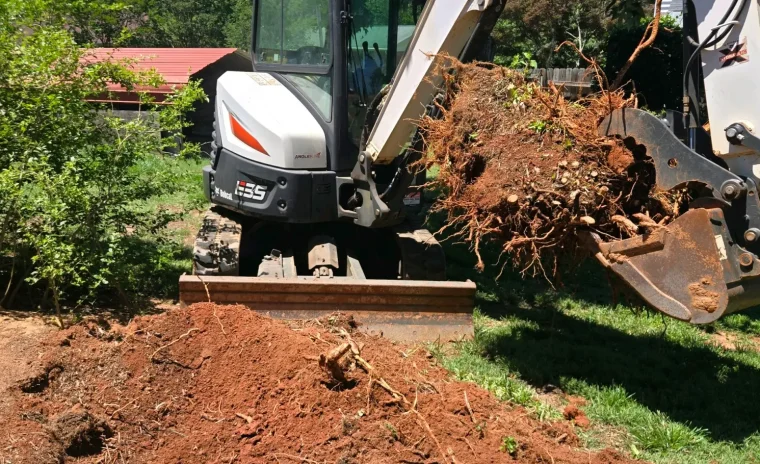
Preventing these conditions requires more than standard installation. Proper excavation services must create drainage pathways that channel surface water away from the drainfield, and land grading must ensure slopes direct runoff downhill rather than across the septic area. Without this level of precision during the initial build, even a correctly sized system will struggle in Foothills soil.
5 Warning Signs Your Septic System Needs Repair
Recognizing the early warning signs of septic trouble can save you thousands of dollars and prevent environmental hazards. These five indicators are especially common in the Foothills, where clay soil and sloped terrain amplify system stress.
First, slow-draining fixtures tell you that wastewater is not moving through the system efficiently. If your sinks, tubs, or toilets drain sluggishly after a rainstorm but seem fine during dry weeks, the drainfield is likely saturated and struggling to accept additional flow. Second, watch for unusually green or lush grass directly above the leach field, or soggy, marshy patches that never dry out. These signs indicate that effluent is surfacing rather than filtering through the soil, which means the drainfield is failing.
Third, foul odors inside your home or outdoors near the tank and drainfield point to a backup or leak. Septic gases should vent through your roof stack, not seep into living spaces or escape from the yard. Fourth, gurgling sounds in your plumbing lines suggest air trapped in the system, often caused by a blockage or a saturated drainfield that cannot accept more wastewater. Finally, if you see dark liquid or raw sewage surfacing on sloped terrain, the system has completely lost its ability to process waste and requires immediate attention.
Each of these signs indicates a specific failure point, whether in the tank, distribution box, or drainfield itself. Addressing them early often means the difference between a targeted repair and a full system replacement.
Repair vs. Complete Replacement: What to Expect
When septic problems arise, the first question property owners ask is whether they need a repair or a full replacement. The answer depends on the age of the system, the extent of damage, and whether the original installation accounted for local soil and terrain conditions.
Targeted repairs make sense when the issue is isolated. Crushed or shifted pipe lines can be excavated and replaced without disturbing the entire drainfield. A broken distribution box, which evenly divides effluent among drainfield trenches, can be repaired or replaced in a single day. Damaged tank baffles, which prevent solids from entering the drainfield, are another common repair that restores function without major excavation. These fixes typically cost a fraction of a full replacement and extend the life of an otherwise functional system.
Full system replacement becomes necessary when the drainfield itself has failed. Systems older than twenty to thirty years often reach the end of their functional life as soil compaction, biomat buildup, and structural degradation take their toll. More commonly in the Foothills, drainfields fail prematurely because the original site prep did not address clay soil, slope, or drainage. In these cases, residential excavation services must remove the old system, re-evaluate the site with proper percolation testing, and install a new drainfield designed for local conditions.
Proper excavation is critical during replacement. Sloped lots and rocky terrain require specialized equipment and operators who understand how to work without damaging surrounding property, destabilizing slopes, or creating new drainage problems. An excavation company familiar with Foothills topography knows how to grade the site, install proper drainage, and position the new system where it will perform reliably for decades.
The Importance of Proper Site Prep & Local Health Department Approval
No septic installation or replacement in North Carolina can proceed without approval from the local health department. This process begins with a soil evaluation and percolation test, which determine whether the site can support a conventional drainfield or requires an alternative system. Health department officials review site plans, verify setbacks from wells and property lines, and issue permits only when the design meets state and county codes.
Working directly with county health departments ensures that your system will pass inspection and function legally. Local specialists who understand Polk County regulations can navigate the permitting process efficiently, schedule required inspections, and address any site-specific concerns before installation begins. This coordination prevents costly delays and ensures that the finished system meets all compliance standards.
Equally important is proper final grading and surface water diversion. After the tank and drainfield are installed, land grading services must shape the surrounding terrain to direct rainwater away from the absorption area. Without this step, even a perfectly installed system will fail as runoff saturates the drainfield during every storm. Techniques such as swales, berms, and strategically placed drainage pathways prevent water from pooling over the septic area and give the system the dry conditions it needs to process wastewater effectively. Professional teams experienced in Foothills terrain know how to balance erosion control, surface drainage, and long-term system performance in a single grading plan.